Explore how invasive species threaten Wisconsin’s biodiversity, forests, agriculture, and communities—and how prevention, early detection, and responsible restoration can protect our natural heritage.

Wisconsin, the "Badger State," is renowned for its stunning natural beauty and ecological diversity. From the ancient forests of the Northwoods to the sprawling prairies of the south, the serene shores of its 15,000 lakes, and the mighty rivers that carve through its landscape, our state boasts a rich tapestry of ecosystems. This natural heritage provides unparalleled opportunities for recreation, supports a vibrant economy, and forms the very essence of our identity.
However, beneath this picturesque surface lurks a silent, insidious threat: non-native invasive species. These unwelcome guests are quietly, yet relentlessly, chipping away at the foundation of Wisconsin's natural world. They disrupt delicate ecological balances, undermine native biodiversity, and pose significant economic and even health risks. Understanding and actively managing invasive species isn't just an ecological preference; it's a critical imperative for preserving the Wisconsin we know and love for future generations.
What Exactly Are Invasive Species?
Before diving into their impacts, it's crucial to understand what distinguishes an "invasive" species from a mere "non-native" one. Not every species introduced to a new environment becomes invasive. A species is generally classified as invasive if it meets two key criteria:
Non-Native (or Alien): It has been introduced to an ecosystem where it did not evolve naturally.
Harmful: Its introduction causes or is likely to cause economic or environmental harm or harm to human health.
Invasive species often possess a suite of characteristics that make them particularly destructive. They tend to reproduce rapidly, grow aggressively, and are highly adaptable to new conditions. Crucially, in their new environments, they often lack the natural predators, diseases, or competitors that kept their populations in check in their native ranges. This gives them an unfair advantage over native species, allowing them to outcompete and displace local flora and fauna, fundamentally altering the invaded ecosystems.
Ecological Impacts: A Web Unraveling
The most profound and far-reaching consequences of invasive species are felt within Wisconsin's diverse ecosystems. They act like a wrench in the gears of nature, disrupting processes that have evolved over millennia.
Loss of Biodiversity: The Silence of Disappearing Species
Perhaps the most devastating impact of invasive species is their direct contribution to the loss of biodiversity. Native plants and animals have evolved in complex relationships with each other and their environment. Invasive species barge into these intricate webs, often with brute force.
Outcompetition: Invasive plants, like Garlic Mustard (Alliaria petiolata) in our woodlands or Common Buckthorn (Rhamnus cathartica) in our forest understories, leaf out earlier, grow faster, and produce more seeds than native species. They hog sunlight, water, and nutrients, effectively starving out native wildflowers, shrubs, and tree seedlings. This isn't just an aesthetic change; it eliminates critical food sources and shelter for native insects, birds, and mammals. Imagine a forest floor once carpeted with trillium and bloodroot, now a monoculture of garlic mustard – a beautiful spring ephemeral habitat gone.
Habitat Degradation: Beyond direct competition, invasives fundamentally change the structure of habitats. Phragmites (Phragmites australis), or common reed, forms incredibly dense, tall monocultures in wetlands and along shorelines. These impenetrable stands reduce open water for waterfowl, eliminate diverse vegetation needed by marsh birds for nesting, and significantly reduce the quality of crucial wetland habitats. Similarly, buckthorn creates dense, shady thickets that prevent native trees and shrubs from regenerating, leading to forests with little understory diversity.
Altered Ecosystem Functions: Invasives can even change fundamental ecological processes. Some, like buckthorn, can alter soil chemistry, making it harder for native plants to grow. Others, particularly in aquatic environments, can disrupt nutrient cycling and water flow. Eurasian Watermilfoil (Myriophyllum spicatum) forms dense mats on the surface of lakes, blocking sunlight from reaching native aquatic plants below, decreasing dissolved oxygen levels when it decomposes, and altering the entire aquatic food web.
Disruption of Food Webs: A Domino Effect
When native plants disappear, so do the insects that rely on them for food, and then the birds that eat those insects, and so on up the food chain. Rusty Crayfish (Orconectes rusticus), an aggressive invasive found in many Wisconsin lakes and rivers, outcompete native crayfish for food and habitat. They devour aquatic vegetation and invertebrate eggs, reducing food availability for fish and waterfowl, ultimately impacting game fish populations that anglers pursue. The loss of a single keystone native species due to an invasive can trigger a cascade of negative effects throughout an entire ecosystem.
Agriculture: Burdening Our Farmers
Wisconsin's agricultural sector is a cornerstone of its economy, but farmers bear a heavy burden from invasive plants and pests. Aggressive weeds like Palmer Amaranth (Amaranthus palmeri) can rapidly infest agricultural fields, dramatically reducing crop yields and increasing the need for costly herbicides and labor. Invasive insects, such as the Japanese Beetle (Popillia japonica), can devastate a wide array of crops, from corn and soybeans to fruits and ornamentals, requiring extensive pest management strategies. These added costs cut into farmers' profits and can lead to higher food prices for consumers.
Forestry: A Threat to Timber and Forests
Wisconsin's forests are economically crucial for timber, paper products, and countless other industries. Invasive species pose a direct threat to forest health and productivity. The Emerald Ash Borer (EAB, Agrilus planipennis), an invasive beetle, has already decimated tens of millions of ash trees across the Midwest, including Wisconsin. This results in massive economic losses from lost timber value, costly tree removal, and the need to replace trees in urban and suburban areas. Future invasives threaten other tree species, risking further damage to our valuable forest resources.
Human Health & Safety Concerns
While often overlooked, some invasive species pose direct threats to human health and safety.
Direct Health Risks: Plants like Giant Hogweed (Heracleum mantegazzianum) and Wild Parsnip (Pastinaca sativa) produce sap that, upon contact with skin and exposure to sunlight, can cause severe burns, blisters, and long-lasting scars. Asian Bush Honeysuckle (Lonicera maackii, L. tatarica, etc.) and buckthorn create dense thickets that favor increased tick populations, raising concerns about Lyme disease and other tick-borne illnesses.
Safety: Dense invasive plant growth along roadways can reduce visibility for drivers, creating hazardous conditions.
Key Invasive Species in Wisconsin
Wisconsin battles a wide array of invasive species, each with its unique impact.
Terrestrial Plants
Garlic Mustard: Chokes out native wildflowers in forests.
Common Buckthorn: Forms dense thickets, degrading forest understories.
Honeysuckle: A crawling shrub that forms tangled brambles and outcompeting native woodland species.
Phragmites: Destroys wetland habitats with dense monocultures.
Wild Parsnip: Causes severe skin burns and outcompetes native prairie plants.
Japanese Knotweed: Aggressive, fast-growing plant that damages infrastructure and ecosystems.
What Can Be Done: The Role of Management
The fight against invasive species is ongoing, but it is not hopeless. Effective management strategies involve a multi-pronged approach, and crucially, everyone has a role to play. The most effective and cost-efficient method of invasive species management is prevention. Once an invasive species establishes itself, eradication becomes exponentially more difficult and expensive. Ways to be preventative:
Plant Native: When landscaping your home or garden, choose native plants. They are adapted to local conditions, require less maintenance, and provide essential resources for local wildlife, while preventing the introduction of ornamental invasives.
Early Detection and Rapid Response (EDRR): Act Fast! Identifying new infestations when they are small and localized dramatically increases the chances of successful eradication.
Control and Eradication: For established populations, various control methods are employed
Mechanical Control: Hand-pulling, cutting, mowing, and prescribed burning can be effective for certain species, especially when done repeatedly over several years.
Chemical Control: Herbicides and pesticides are often necessary for widespread or particularly tenacious invaders, always applied judiciously and by trained professionals to minimize harm to non-target species.
Biological Control: Introducing natural enemies (e.g., specific insects that feed on an invasive plant) from the invasive species' native range can be a long-term solution, though this requires extensive research to ensure the control agent itself doesn't become problematic.
After control, restoration is crucial—replanting with native species helps to restore ecological function and prevent reinvasion. Learn more about this from the Stewardship Networks Webcast on using plants to control buckthorn
The battle against invasive species is a defining challenge for conservation in Wisconsin. It's a complex, persistent fight, but it is one we cannot afford to lose. The ecological and economic costs of inaction are simply too high.
Protecting Wisconsin's natural heritage requires a collective commitment: from state agencies and researchers developing innovative solutions, to landowners managing their properties, to outdoor enthusiasts practicing responsible recreation, and everyday citizens making informed choices. Each action, no matter how small, contributes to the larger effort.
By understanding the threat, acting preventatively, reporting new invaders, and participating in management efforts, we can all play a vital role in preserving the biodiversity, beauty, and resilience of Wisconsin's magnificent landscapes. Let us work together to ensure that the "Badger State" remains a vibrant sanctuary for native life for generations to come.

Front Yard Pollinator Planting & Flagstone Walkway Conversion
Prairie Revival Ecological converted foundation beds and front-yard turf into native pollinator plantings, replacing an impermeable concrete walk with a semi-permeable flagstone path.

Pollinator Habitat Installation — A Five-Year Backyard Turf Conversion Plan
A phased, herbicide-free backyard conversion by Prairie Revival Ecological, combining native pollinator plantings, meandering walking paths, a Schuette’s Oak, and site-specific turf removal.

Buckthorn Removal — Protecting Native Diversity on a Three-Acre Woodlot
Prairie Revival Ecological removed 10–15-foot common buckthorn from a three-acre residential woodlot while working around red osier dogwood, maple, and viburnum to protect existing native diversity.
Protecting Wisconsin's Natural Heritage: Why Invasive Species Management is Crucial
Explore how invasive species threaten Wisconsin’s biodiversity, forests, agriculture, and communities—and how prevention, early detection, and responsible restoration can protect our natural heritage.
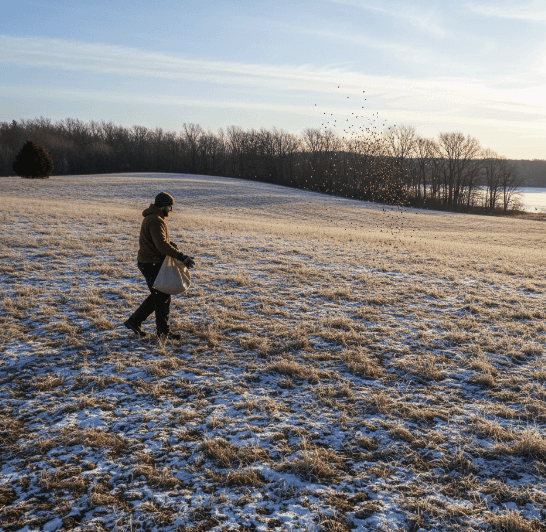
Frost Seeding: A Winter Strategy for Thriving Native Prairies in Wisconsin
Discover how frost seeding uses Wisconsin’s winter freeze-thaw cycles to help establish native prairie plants, with guidance on seed selection, timing, site preparation, and ongoing stewardship.
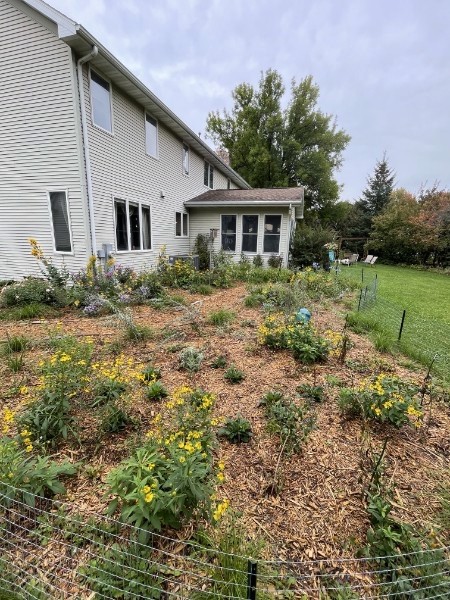
Why Fall Is the Ultimate Season to Plant Native Perennials, Grasses, and Sedges
Explore the benefits of fall planting for Wisconsin native perennials, grasses, and sedges, including root establishment, wildlife habitat, and practical planting tips.
GOOD QUESTIONS. CLEAR NEXT STEPS.
Before we start on your land.
Answers for Wisconsin landowners exploring native landscapes, habitat improvements, and ecological restoration.
Where do you work?
Prairie Revival Ecological is based in Appleton and serves the Fox Valley, including Neenah, Menasha, Grand Chute, surrounding communities, and projects across Wisconsin. Availability and project scope are discussed during planning.
What services do you offer?
Services include native landscaping, ecosystem restoration, wildlife habitat work, education and outreach, consultation and design, and prescribed fire planning and implementation where appropriate. A detailed service list can be shared separately.
Do you only work on residential properties?
No. Work can include residential gardens, woodlots, grasslands, and community or organizational landscapes. Project fit is evaluated case by case, and not every request is guaranteed to match scope.
How do I start and request a quote?
Share your address, approximate area, photos, goals, timing, and budget if known. You can call, email andy@prairierevival.co, or use the contact page to begin.
Do I need an exact plan before contacting you?
No. A rough description of what you see and what you want is enough to start. Planning conversations can help clarify options and next steps.
How much does a project cost?
Cost varies by size, site access, preparation needs, existing vegetation, plant materials, and management requirements. There are no fixed rates for all sites, so request a scope-specific quote.
Can projects be phased to match my budget?
Often, yes. Phased plans can prioritize key areas first and expand over time. Phasing options are discussed during scope and budgeting, and no financing terms are implied.
When is the best planting time in Wisconsin?
Timing depends on species, plant stock, site conditions, and weather patterns. Spring and fall can both be good windows, while warm-season grasses may require warmer establishment periods.
What are native plants, and are they maintenance-free?
Native plants are regionally appropriate species adapted to local ecosystems and they support the food web. They are not automatically maintenance-free and still need management, especially early on.
Will my yard look messy or too wild?
Native landscapes can be designed with clear edges, paths, layered heights, and intentional bloom sequencing. Visual style is tailored to your goals and site context.
Do I have to replace all my lawn?
No. Many projects keep lawn for recreation, access, or functional needs and convert only targeted areas. Conversions can be staged over time.
Is native landscaping maintenance-free?
No landscape is maintenance-free. Early phases usually require watering and weed control, then shift to seasonal management as plant communities establish.
How long does a prairie or habitat project take to establish?
Establishment often takes several growing seasons and varies by site conditions. Early growth is frequently below ground as roots develop, so quick visual maturity should not be assumed.
Do I need to water new plants?
Usually, yes during establishment. Watering needs depend on weather, soils, and plant type, and a practical care approach can be agreed for each project.
What about rabbits and deer browsing?
Browsing pressure is site-specific. Measures like temporary fencing or guards can help in some cases, but no single method works for every project.
Can we keep some existing plants?
Yes, desirable existing plants can be reviewed and incorporated where they fit the long-term goals and ecological function of the site.
Do you offer herbicide-free restoration?
Mechanical and solarization-based approaches can be used where suitable. For dense or persistent invasives, precision chemical methods may still be recommended; zero-herbicide outcomes are not guaranteed.
How is buckthorn controlled?
Control methods depend on identification, timing, access, and the native recovery plan. Repeated follow-up is usually needed for resprouts and seedlings; there is no instant permanent eradication.
How is brush and woody debris handled?
Disposal and reuse are handled site by site based on safety, feasibility, and project goals. Material may be repurposed where appropriate, but methods vary by project.
Can rain gardens solve drainage problems?
Rain gardens can help with runoff management when properly sited and designed, but outcomes depend on soils and overflow conditions. Some sites may require engineering or permits, and flood prevention is never guaranteed.
Is prescribed fire safe and always available?
Prescribed fire depends on site suitability, fuels, weather, permissions, and trained personnel. Not all sites qualify, and exact burn dates cannot be guaranteed.
Will wildlife definitely return?
Projects can improve food, cover, and nesting opportunities, but wildlife use depends on broader landscape context. Specific species presence is not guaranteed.
Do I need permits or utility locates?
Requirements vary by activity and location, including local rules, shoreline or wetland considerations, burn permissions, and utility locates. These factors are reviewed before work begins.
What ongoing help is available after installation?
Ongoing support can include maintenance, education, phased implementation, and follow-up visits depending on agreed scope. Continued service is discussed, not automatically included.