A phased, herbicide-free backyard conversion by Prairie Revival Ecological, combining native pollinator plantings, meandering walking paths, a Schuette’s Oak, and site-specific turf removal.

A phased approach to backyard pollinator habitat
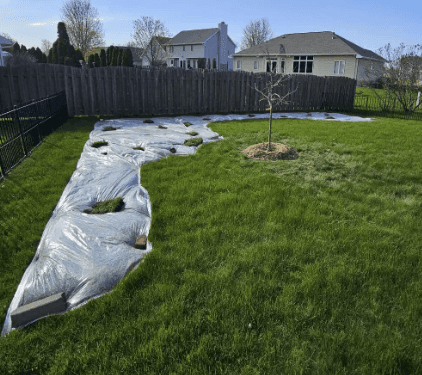
This project was designed as a five-year installation plan to replace most of a backyard’s turf grass with native plantings and meandering walking paths. The work focused on the space around an ash tree that had previously been removed from the middle of the yard.
The goal was a gradual transformation without herbicide: establish a new focal tree, develop a master plan, and install the native habitat in manageable phases. The project described here includes the first and second installation phases, not a claim that the entire five-year plan is complete.
Establishing the focal point: Schuette’s Oak
The first step was planting a Schuette’s Oak to replace the removed ash tree. This naturally occurring hybrid brings together Bur Oak and Swamp White Oak lineage. It was selected for the fire-tolerance traits associated with Bur Oak, the water-tolerance traits associated with Swamp White Oak, and the potential for vigorous growth.
The project’s tree selection also considered hybrid vigor and the possibility of faster growth than either parent. Growth and tolerance vary with the individual tree and site conditions, so these qualities are selection considerations rather than guarantees for every planting.
Developing the five-year native landscape master plan
After the oak was installed, a five-year master plan was developed and the first planting installment was identified. The layout aimed to gradually replace turf with native plants while leaving walking paths that meander through the garden.
A phased plan allowed the yard to change over time rather than requiring a single large conversion. It also provided the opportunity to learn from the first planting before preparing the next area.
First-year installation: six weeks of solarization
To remove the turf without chemicals, we used solarization for six weeks. After removing the solarization sheet, we planted the prepared area immediately.
As shown in the second supplied photo, turf encroachment was a significant factor during the first year after installation. On this project, the native plants became better able to compete with the turf as the planting established. That experience reinforces the importance of paying attention to lawn edges and early competition rather than expecting a new planting to fill in immediately.
Second-year installation: adapting to shade
The second-year installation followed the same approach, this time beside the thriving planting from the previous phase. However, solarization was less effective in an area that received a little shade from a flowering crabapple.
That small amount of shade gave the turf a break from direct sun in the middle of the day, allowing some grass to survive. The remaining turf was removed manually before the native planting was installed.
This was an important site-specific lesson: even limited shade can affect solarization results. Preparing another planting area required observation and adjustment, not simply repeating the previous year’s method without checking the outcome.
What this project demonstrates
A five-year plan can organize a gradual conversion of most backyard turf into native habitat.
A focal tree can anchor the design after the loss of an existing tree.
Herbicide-free turf removal can include solarization and manual removal where needed.
Turf encroachment deserves attention during establishment.
Sun exposure and even brief shade can change the effectiveness of site preparation.
A successful earlier phase can inform the next planting installment.
Native plants becoming competitive with turf on this site does not mean all turf encroachment disappears automatically. Establishment conditions and maintenance needs vary by property. The value of the master plan is that it supports an adaptable sequence of work.
Related native landscaping and planning services
Explore Pollinator Gardens, Turf Replacement, Landscaping Conversion, Tree & Shrub Installation, and Custom Restoration & Habitat Master Plans. You can also browse the full Urban Restoration category.
Plan your own phased backyard conversion
Based in Appleton, Prairie Revival Ecological serves the Fox Valley and Wisconsin statewide. If you want to replace underused lawn with native pollinator habitat over time, contact us about a phased planting plan. Share your goals, existing trees, sun conditions, and how you use the yard so we can discuss an appropriate starting point.



Front Yard Pollinator Planting & Flagstone Walkway Conversion
Prairie Revival Ecological converted foundation beds and front-yard turf into native pollinator plantings, replacing an impermeable concrete walk with a semi-permeable flagstone path.
Pollinator Habitat Installation — A Five-Year Backyard Turf Conversion Plan
A phased, herbicide-free backyard conversion by Prairie Revival Ecological, combining native pollinator plantings, meandering walking paths, a Schuette’s Oak, and site-specific turf removal.

Buckthorn Removal — Protecting Native Diversity on a Three-Acre Woodlot
Prairie Revival Ecological removed 10–15-foot common buckthorn from a three-acre residential woodlot while working around red osier dogwood, maple, and viburnum to protect existing native diversity.

Protecting Wisconsin's Natural Heritage: Why Invasive Species Management is Crucial
Explore how invasive species threaten Wisconsin’s biodiversity, forests, agriculture, and communities—and how prevention, early detection, and responsible restoration can protect our natural heritage.
Frost Seeding: A Winter Strategy for Thriving Native Prairies in Wisconsin
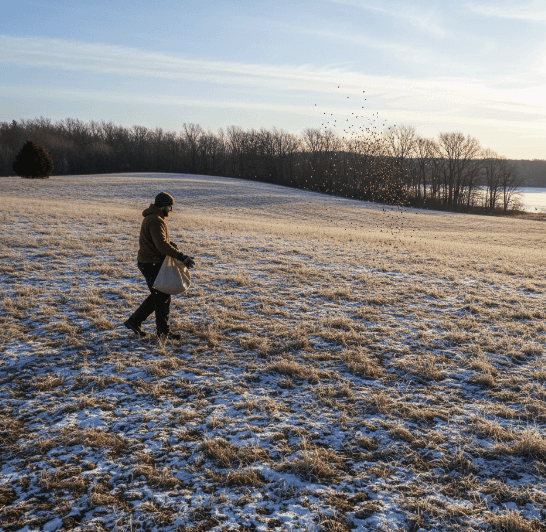
Discover how frost seeding uses Wisconsin’s winter freeze-thaw cycles to help establish native prairie plants, with guidance on seed selection, timing, site preparation, and ongoing stewardship.
Why Fall Is the Ultimate Season to Plant Native Perennials, Grasses, and Sedges
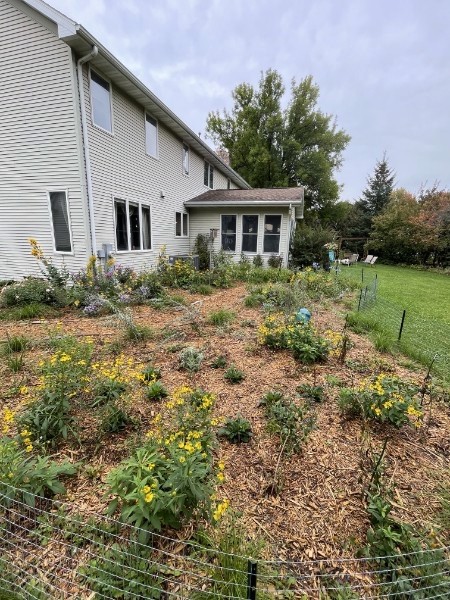
Explore the benefits of fall planting for Wisconsin native perennials, grasses, and sedges, including root establishment, wildlife habitat, and practical planting tips.
GOOD QUESTIONS. CLEAR NEXT STEPS.
Before we start on your land.
Answers for Wisconsin landowners exploring native landscapes, habitat improvements, and ecological restoration.
Where do you work?
Prairie Revival Ecological is based in Appleton and serves the Fox Valley, including Neenah, Menasha, Grand Chute, surrounding communities, and projects across Wisconsin. Availability and project scope are discussed during planning.
What services do you offer?
Services include native landscaping, ecosystem restoration, wildlife habitat work, education and outreach, consultation and design, and prescribed fire planning and implementation where appropriate. A detailed service list can be shared separately.
Do you only work on residential properties?
No. Work can include residential gardens, woodlots, grasslands, and community or organizational landscapes. Project fit is evaluated case by case, and not every request is guaranteed to match scope.
How do I start and request a quote?
Share your address, approximate area, photos, goals, timing, and budget if known. You can call, email andy@prairierevival.co, or use the contact page to begin.
Do I need an exact plan before contacting you?
No. A rough description of what you see and what you want is enough to start. Planning conversations can help clarify options and next steps.
How much does a project cost?
Cost varies by size, site access, preparation needs, existing vegetation, plant materials, and management requirements. There are no fixed rates for all sites, so request a scope-specific quote.
Can projects be phased to match my budget?
Often, yes. Phased plans can prioritize key areas first and expand over time. Phasing options are discussed during scope and budgeting, and no financing terms are implied.
When is the best planting time in Wisconsin?
Timing depends on species, plant stock, site conditions, and weather patterns. Spring and fall can both be good windows, while warm-season grasses may require warmer establishment periods.
What are native plants, and are they maintenance-free?
Native plants are regionally appropriate species adapted to local ecosystems and they support the food web. They are not automatically maintenance-free and still need management, especially early on.
Will my yard look messy or too wild?
Native landscapes can be designed with clear edges, paths, layered heights, and intentional bloom sequencing. Visual style is tailored to your goals and site context.
Do I have to replace all my lawn?
No. Many projects keep lawn for recreation, access, or functional needs and convert only targeted areas. Conversions can be staged over time.
Is native landscaping maintenance-free?
No landscape is maintenance-free. Early phases usually require watering and weed control, then shift to seasonal management as plant communities establish.
How long does a prairie or habitat project take to establish?
Establishment often takes several growing seasons and varies by site conditions. Early growth is frequently below ground as roots develop, so quick visual maturity should not be assumed.
Do I need to water new plants?
Usually, yes during establishment. Watering needs depend on weather, soils, and plant type, and a practical care approach can be agreed for each project.
What about rabbits and deer browsing?
Browsing pressure is site-specific. Measures like temporary fencing or guards can help in some cases, but no single method works for every project.
Can we keep some existing plants?
Yes, desirable existing plants can be reviewed and incorporated where they fit the long-term goals and ecological function of the site.
Do you offer herbicide-free restoration?
Mechanical and solarization-based approaches can be used where suitable. For dense or persistent invasives, precision chemical methods may still be recommended; zero-herbicide outcomes are not guaranteed.
How is buckthorn controlled?
Control methods depend on identification, timing, access, and the native recovery plan. Repeated follow-up is usually needed for resprouts and seedlings; there is no instant permanent eradication.
How is brush and woody debris handled?
Disposal and reuse are handled site by site based on safety, feasibility, and project goals. Material may be repurposed where appropriate, but methods vary by project.
Can rain gardens solve drainage problems?
Rain gardens can help with runoff management when properly sited and designed, but outcomes depend on soils and overflow conditions. Some sites may require engineering or permits, and flood prevention is never guaranteed.
Is prescribed fire safe and always available?
Prescribed fire depends on site suitability, fuels, weather, permissions, and trained personnel. Not all sites qualify, and exact burn dates cannot be guaranteed.
Will wildlife definitely return?
Projects can improve food, cover, and nesting opportunities, but wildlife use depends on broader landscape context. Specific species presence is not guaranteed.
Do I need permits or utility locates?
Requirements vary by activity and location, including local rules, shoreline or wetland considerations, burn permissions, and utility locates. These factors are reviewed before work begins.
What ongoing help is available after installation?
Ongoing support can include maintenance, education, phased implementation, and follow-up visits depending on agreed scope. Continued service is discussed, not automatically included.